


What is the best private health insurance in the UK in 2025?



Bupa is the best private health insurance in the UK in 2025, scoring 90% overall in myTribe’s independent ratings and topping four of six assessment categories. WPA (89%) is also highly rated, offering flexible benefits and outstanding customer service, while The Exeter (88%) is often best for those with complex medical histories. Read on to find out how each compares and which might be best for you. ↓


Top 10 best health insurance providers in December 2025
Our impartial analysis of policy benefits and limitations, terms and conditions, and real customer reviews shows that the 10 best private health insurance companies in the UK in December 2025 are:
- Bupa (myTribe rating 5.0 ★)
- WPA (myTribe rating 5.0 ★)
- The Exeter(myTribe rating 5.0 ★)
- Vitality (myTribe rating 5.0 ★)
- Axa Health (myTribe rating 4.5 ★)
- Freedom (myTribe rating 4.5 ★)
- General & Medical (myTribe rating 4.5 ★)
- Aviva (myTribe rating 4.0 ★)
- Saga (myTribe rating 4.0 ★)
- National Friendly (myTribe rating 4.0 ★)
*Ratings based on each providers' flagship private medical insurance policy.
You can read our detailed reviews of these providers and their market-leading health insurance policies below, or request a free comparison quote to find the best health insurer for you

Why you can trust our health insurance reviews
We specialise in private health insurance in the UK and base our reviews on detailed analysis of each insurer’s policy documents, alongside tens of thousands of verified customer reviews. Our work is independent, data-led and designed to help you understand how policies really work.
- Independent and impartial - no commercial ties with insurers
- 198 policy documents and 400+ policy benefits analysed
- 30+ years’ insurance experience and CII-qualified experts
Compare the top ten private health insurance providers
|
Provider
|
Overall
Overall rating
What this means:
|
Reviews
Customer reviews and ratings
What we looked at:
|
Hospital
Hospital and cancer care
What we looked at:
|
Outpatient
Outpatient and extras
What we looked at:
|
Cost
Cost and affordability
What we looked at:
|
Joining
Ease of joining or switching
What we looked at:
|
Clarity
Clarity of policy information
What we looked at:
|
Compare quotes |
|---|

Based on extensive independent research, our private healthcare experts’ top 10 private health insurance companies and plans for 2025 are:
1. Bupa

Outstanding for: Mental health cover, families and the over 50s
Assessment categories
- Customer reviews and ratings: 95%
- Hospital and cancer care: 100%
- Outpatient and extras: 88%
- Cost and affordability: 90%
- Ease of joining or switching: 90%
- Clarity of policy information: 90%
Why we rated Bupa best overall in 2025
Bupa scored 90% in our 2025 health insurance reviews, topping four of six categories to claim the highest overall rating. It's one of only two insurers to include mental health cover for all members (it's not optional) - and the only one that commits to never withdrawing that cover simply because treatment spans a longer period.
That focus on long-term support extends to claims. Bupa ranks among our top three for protecting you from premium rises: smaller claims (up to £300) won't affect your discount level, and you'd need to claim over £1,200 in a year to fall the maximum three levels, which should translate into better price protection at renewal.
Pros
- Go direct to Bupa for a range of health concerns
- Mental health cover as standard1, including recurring conditions2
- No upper age limits, join at anytime
- Dental care included for all members
- Strong no claims discount rules
Cons
- Multiple treatments share the same outpatient allowance3
1. Outpatient mental health treatment subject to your chosen outpatient limit. 2. Subject to Bupa’s covered conditions and underwriting terms. 3. Only applicable when an outpatient limit is applied.
Bupa Customer Reviews
Bupa UK currently has a rating of 4.5/5 from 38,731 reviews on Trustpilot as of 1st December 2025, which according to the reviews platform, suggests customers think it is “Excellent”. What’s encouraging isn’t just the score but the volume of reviews, which indicates a consistently high level of customer service.
Click here to read our in-depth review of Bupa health insurance.
2. WPA
Outstanding for: Customer service, flexible benefits and the under 65s

Assessment categories
- Customer reviews and ratings: 95%
- Hospital and cancer care: 100%
- Outpatient and extras: 90%
- Cost and affordability: 87%
- Ease of joining or switching: 80%
- Clarity of policy information: 80%
Why WPA should be on your shortlist
WPA scored 89% in our 2025 health insurance reviews - just one percentage point behind our top spot - and excelled in three of six categories. What sets WPA apart is unrivalled flexibility: outpatient consultations, diagnostics, therapies and mental health are all set separately, so you pay for what you need, not what you don't.
WPA has held a Trustpilot rating of 4.6/5 or higher for the five years we've tracked it - the most consistent of any insurer we review. That service reputation is backed by fair claims terms too: claims under £250 won't affect your no claims discount, and WPA's recently updated 15-level scale offers a maximum discount of 73%.
Pros
- Set individual limits for many benefits
- Broad private consultant and hospital access
- Good no claims discount terms
- Flexible cash benefits
- Self-refer for structured counselling1
Cons
- Harder to join after you turn 66
- Itemised options make it more complicated
1. Six sessions per year following assessment.
WPA customer reviews
WPA currently has the best Trustpilot ratings of any provider in our private health insurance review. It scores an impressive 4.7/5 from 4,670 reviews and is rated “Excellent” as of 1st December 2025. WPA only provides health insurance and cash plans, making its reviews relevant. Customers frequently praise WPA, saying it is "quick to respond", "keep you informed", "is always prompt" and is "incredibly supportive".
Click here to read our in-depth review of WPA health insurance.
3. The Exeter
Outstanding for: Fair underwriting, premium predictability and complex medical histories

Assessment categories
- Customer reviews and ratings: 85%
- Hospital and cancer care: 100%
- Outpatient and extras: 78%
- Cost and affordability: 83%
- Ease of joining or switching: 100%
- Clarity of policy information: 100%
Why we rated The Exeter highly in 2025
The Exeter earnt an 88% rating overall, the third highest in our 2025 health insurance reviews. It is the only insurer to score 100% in our categories of clarity of product information and ease of joining and switching. The Exeter publishes exactly how its underwriting team assesses a range of conditions, and flags important decisions (like guided versus traditional hospital list) upfront rather than burying them in the small print.
That straightforward approach extends to claims. The Exeter has what we consider market-leading no claims discount terms: claims up to £300 won't affect your discount level, and you'd need to claim over £2,000 in a policy year to drop the maximum three levels - the most generous thresholds we've seen, offering the best protection from price rises after a claim.
Pros
- Small-claims1 won’t affect your no claims discount
- The choice to separate your outpatient benefits
- Excellent core product and coverage
- Access to health specialists via its HealthWise app
- Optional benefits don’t draw on your outpatient allowance
Cons
- No option for cash back towards dentist or optician fees
- You can’t join after your 80th birthday
1. Claims under £300 see you stay at the same discount level
The Exeter customer reviews
The Exeter currently has a rating of 3.9 out of 5 on Trustpilot from 1,185 reviews as of 1st December 2025. The Exeter provides life insurance and income protection too, so visiting its profile and filtering the reviews with the word “health” or similar, should give you a better understanding of its customers' views of that product.
Click here to read our in-depth review of The Exeter health insurance.
4. Vitality
Outstanding for: Wellness rewards self-referred therapies, active individuals and couples

Assessment categories
- Customer reviews and ratings: 90%
- Hospital and cancer care: 100%
- Outpatient and extras: 90%
- Cost and affordability: 87%
- Ease of joining or switching: 85%
- Clarity of policy information: 80%
Why Vitality suits those that keep fit
With an overall score of 87%, Vitality ranks fourth in our 2025 reviews - but operates entirely differently to the rest. Your renewal premiums are shaped by your Vitality Status: tracked activity and health engagement directly influence what you pay, rewarding those who look after themselves.
That model often suits active individuals and couples, but families should be aware that the claims thresholds that also affect renewal premium increases are shared across the policy. Adding a third person (a child for example) doesn't increase your allowances, so one family member's claims can affect everyone's premiums. This is unlike our top three health insurers, where there is a separate no claims discount per person.
Pros
- Vitality Programme rewards healthier livin
- Choice of combined or separate outpatient limits
- Cover for specific weight loss surgeries
- Includes some physio and talking therapies1
- Up to £100 per year towards prescriptions and minor tests2
Cons
- Lack of activity can impact premiums
- Doesn’t include a no claims discount
- Terms around recurring mental health conditions
1. Up to 6 sessions of physiotherapy per plan year within Vitality’s network of providers. Up to 8 sessions of cognitive behavioural therapy or counselling within its Talking Therapies network. 2. Per plan year, for private prescriptions and minor diagnostic tests.
Vitality customer reviews
Vitality is rated 4.4/5 on Trustpilot, based on 59,426 reviews (as of 1st December 2025), which earns it “Excellent” status. However, these reviews cover all Vitality's services, not just its health insurance. Since it is not clear which reviews relate to private health insurance, you may prefer to visit Trustpilot to read the feedback for yourself.
Click here to read our in-depth review of Vitality health insurance.
5. Axa Health

Excellent for: Comprehensive cover and unlimited diagnostics

Assessment categories
- Customer reviews and ratings: 80%
- Hospital and cancer care: 100%
- Outpatient and extras: 83%
- Cost and affordability: 80%
- Ease of joining or switching: 80%
- Clarity of policy information: 90%
What makes AXA Health comprehensive
Fifth in our 2025 reviews with 85% overall, AXA Health stands out for unlimited specialist-referred diagnostics - even with standard outpatient cover, something most insurers cap or restrict to complex scans.
Mental health and complementary therapies also sit as separate benefits rather than sharing an outpatient pot. The trade-off is AXA's no claims discount: unlike our top three, there's no distinction between small and large claims - any claim drops you three levels regardless of value, which could mean steeper premium rises after minor treatments.
Pros
- Unlimited specialist referred diagnostics with standard outpatient cover
- Separate benefits for complementary therapies and mental health treatment
- Cover for specialist-referred oral surgery
- Optional benefit for face-to-face GP consultations
- No limit on outpatient therapies (add-on)
Cons
- Claims1 of all sizes have the same impact on your no claims discount
- Terms around recurring mental health conditions
- Over 74 year olds can’t join
- Complicated product range and documents
1. Up to 6 sessions of physiotherapy per plan year within Vitality’s network of providers. Up to 8 sessions of cognitive behavioural therapy or counselling within its Talking Therapies network. 2. Per plan year, for private prescriptions and minor diagnostic tests.
Axa Health customer reviews
Axa Health has a 4.1/5 Trustpilot rating from 17,379 reviews (as of 1st December 2025), all of which relate to its private health insurance. Its customers have generally praised its comprehensive policies and welcomed its professional service, but some reviews have criticised its online chat and app, and others mention claims delays.
Click here to read our in-depth review of AXA Health Insurance.
6. Freedom Health Insurance
Excellent for: Broad consultant choice, families and the under 70s

Assessment categories
- Customer reviews and ratings: 80%
- Hospital and cancer care: 100%
- Outpatient and extras: 78%
- Cost and affordability: 80%
- Ease of joining or switching: 85%
- Clarity of policy information: 90%
Why Freedom suits those who value choice
Freedom Health Insurance is the only insurer we assessed that doesn't price by postcode - premiums are the same across the UK, which can work well if you're in a traditionally expensive area. With 84% overall and ranking sixth in our 2025 reviews, Freedom also takes a different approach to consultant access: no guided option, just a traditional hospital list with choice limited only by its fee schedule.
In March 2025, Freedom moved from community-rated pricing to an individual "performance" model. Early data we've seen suggests most members haven't seen significant increases, but it's a change worth watching - particularly at renewal.
Pros
- Inpatient and day patient cover levels
- Broad consultant and hospital access
- Separate alternative therapies and mental health benefits
- £300 for private GP consultations (add-on)
Cons
- Outpatient physiotherapy shares outpatient limit
- No GP referred complex scans
- Mental health terms suggest longer-term treatment may not covered
- You can’t join beyond 70 years of age
Freedom customer reviews
Freedom has the lowest number of reviews of any providers we've covered in this article, making it difficult to draw conclusions about its customer feedback. That said, the reviews platform Feefo is where the bulk of them are found, with Freedom having a score of 4.8 out of 5 from 180 customer reviews (as of 1st December 2025). According to Feefo only 9 of those have been collected in the past year.
Click here to read our in-depth review of Freedom Health Insurance.
7. General & Medical
Excellent for: Pre-existing condition cover (albeit quite limited) and unique cash benefits

Assessment categories
- Customer reviews and ratings: 80%
- Hospital and cancer care: 90%
- Outpatient and extras: 93%
- Cost and affordability: 80%
- Ease of joining or switching: 80%
- Clarity of policy information: 80%
Why General & Medical offers something different
General & Medical is the only insurer offering any cover for pre-existing conditions - its Pre-Existing Condition Upgrade lets you add two conditions (from a list of 14) that will have cover of up to £1,000 per year each. It's fairly limited, but no one else offers it. There are also unique cash benefits for critical illness and personal accidents. With 83% overall, General & Medical ranks seventh in our 2025 reviews.
The trade-off is price predictability. There's no traditional no claims discount - renewals are set individually based on claims history, age and market data. Several benefits also have qualifying periods: 90 days for cancer, six months for enhanced mental health.
Pros
- Inpatient and day patient cover levels
- Guided option or traditional hospital list
- Cover for two pre-existing conditions (add-on)1
- Critical illness cash benefit
- Personal accident cash benefit
Cons
- Renewal premiums set individually
- Several benefits subject to qualifying period
- Can’t join beyond your 75th birthday
- Terms around recurring mental health conditions
1. Limited to £1,000 per condition per policy year. Upgrade only available for a list of 14 pre-defined conditions.
General & Medical customer reviews
General & Medical is rated 3.9 out of 5 on Trustpilot based on 331 customer reviews (as of 1st December 2025). Many customers commend its "professional" and "friendly" service, but some one-star reviews are much less happy with its claims process. The mixed nature of the health insurance reviews and the relatively low volume mean it's a good idea to check them out on Trustpilot so that you can form your own opinion.
8. Aviva

Great for: Unlimited outpatient cover, strong cancer care
Assessment categories
- Customer reviews and ratings: 70%
- Hospital and cancer care: 95%
- Outpatient and extras: 80%
- Cost and affordability: 83%
- Ease of joining or switching: 80%
- Clarity of policy information: 80%
What Aviva offers out of the box
Unlimited outpatient cover as standard, strong cancer care and no upper age limit helped Aviva score 82% in our 2025 reviews, ranking it eighth overall. You can reduce the outpatient cover to manage premiums, but you don't have to - it's one of the most complete core products available.
Aviva’s no claims discount is less protective than our top-rated insurers: claims over £250 drop you three levels regardless of size. Aviva also has a clear "three strikes" rule on mental health - claim for the same condition in three policy years and it's classified as chronic, with cover withdrawn.
Pros
- Excellent cover by default, with options to reduce or increase benefits
- Small claims1 won’t affect your no claims discount (NCD)2
- Specialist referred therapies included
- No upper age limit for new members
- Strong cancer cover levels
Cons
- Combined outpatient benefit when limit applied
- Claims over £250.01 see you drop three NCD levels2
- Mental health conditions can be re-classified as chronic
- Applying outpatient limit affects some inpatient/day-patient benefits
1. If Aviva pays claims of £250 or less in a policy year, your no claims discount is unaffected. 2. Some claims, such as for cash benefits or GP-referred speech therapy, don’t affect your NCD.
Aviva customer reviews
Aviva holds a rating of 4.3/5 on Trustpilot, based on 53,587 reviews (as of 1st December 2025). However, these reviews cover Aviva's entire range of products and services. Where feedback relates to Aviva's private health insurance, reviews are mixed. If customer reviews are a key factor for you, we recommend visiting its Trustpilot profile and filtering the results using relevant keywords such as "health" to focus specifically on feedback from private health insurance customers.
Click here to read our in-depth review of Aviva health insurance.
9. Saga
Great for: Shorter moratorium, mental health cover and the over 50s

Assessment categories
- Customer reviews and ratings: 70%
- Hospital and cancer care: 90%
- Outpatient and extras: 85%
- Cost and affordability: 90%
- Ease of joining or switching: 85%
- Clarity of policy information: 90%
Why Saga works for the over 50s (without kids)
Exclusively for the over 50s with no upper age limit, Saga's standout feature is its three-year moratorium - only pre-existing conditions from the past three years are excluded, versus five with most insurers, potentially meaning fewer exclusions when you join. Saga scored 81% in our 2025 reviews, ranking joint ninth overall.
Saga’s plans are underwritten by Bupa, so you'll find familiar benefits including mental health cover as standard and direct access for certain medical concerns. However, the no claims discount is less forgiving: any claim drops you two levels with no cap per year, and it's applied policy-wide rather than per person - so it’s better suited to individuals than couples or families.
Pros
- Three-year moratorium may limit exclusions
- Cover for mental health included in base products
- Direct access service for several medical concerns
- No upper age limit for new members
- Several ways to reduce your premiums
Cons
- You can’t join below the age of 50
- Impact of “modified” moratorium underwriting unclear on website
- Claims of all sizes have same effect on your no claims discount1
- Excess is deducted from benefit allowance2
- Combined outpatient benefit with Secure plan
1. Cash benefit claims won’t affect your NCD. 2. Where a benefit limit is applied.
Saga customer reviews
Saga has a Trustpilot rating of 4.0 out of 5, based on 42,295 reviews (as of 1st December 2025), which the reviews platform considers "Great". Like some of the other larger providers in this guide, Saga offers such a wide range of products and services that it's tricky to get a clear sense of customer feedback, specifically on its health insurance. Additionally, its recent change in underwriter means many reviews may reflect a completely different claims experience, so it may no longer be relevant.
Click here to read our in-depth review of Saga health insurance.
10. National Friendly
Great for: Simplicity and five-year premium stability

Assessment categories
- Customer reviews and ratings: 65%
- Hospital and cancer care: 90%
- Outpatient and extras: 83%
- Cost and affordability: 73%
- Ease of joining or switching: 85%
- Clarity of policy information: 90%
Why National Friendly takes a simpler approach
National Friendly offers four cover levels. That's it. National Friendly's stripped-back approach scored 79% in our 2025 reviews, ranking it tenth overall - but it's a genuine alternative if you find the customisation elsewhere overwhelming.
The renewal model is unusual: you sign a five-year contract (cancellable mid-term) and your claims shouldn't affect premiums during that period. After five years, National Friendly reviews your history to set a new price. More predictable short-term, though what happens long-term is less clear.
Pros
- Simple choice of four cover levels
- Guided option or traditional hospital list
- Good overall cover levels
- Claims shouldn’t affect renewal premiums in the first five years
Cons
- Limited flexibility beyond your plan choice
- Combined outpatient limit
- Complicated policy documents
- Unclear renewal terms
- Can’t join if you’re over 85
National Friendly customer reviews
National Friendly has the lowest customer rating among the private medical insurance providers we reviewed, with a Trustpilot rating of 4.2/5 (as of 1st December 2025), which is deemed "Great". However, drawing meaningful conclusions from National Friendly's overall customer service rating is difficult given that it has only 304 Trustpilot reviews and many of its unfavourable reviews are for its other products, such as life insurance and income protection. Where customers have mentioned its PMI, they are more positive, often citing its "friendly", "flexible" approach with a human within easy reach.
Private health insurance reviews - key takeaways
- Bupa is our top overall choice for private health insurance in 2025. Its Bupa By You Comprehensive policy offers broad appeal, meeting the needs of a wide range of people and age groups. It also includes market-leading mental health cover as standard.
- WPA stands out for its exceptional customer service, consistently rated highly by its members. Its Complete Health policy is also one of the most flexible on the market, allowing you to fine-tune your cover to suit your needs.
- The Exeter is an excellent choice for those with more complex medical histories or pre-existing conditions, thanks to its personalised approach to underwriting.
- If you’re looking for a policy that rewards healthy living and encourages you to stay active, Vitality is worth considering, though there are some drawbacks for families to be aware of.
Our 2025 private medical insurance (PMI) ratings are based on a structured review of leading personal policies from major UK insurers. We assess Aviva Healthier Solutions, Axa Health Personal Healthcare, Bupa By You Comprehensive, The Exeter Health+, Freedom Elite, General & Medical Lifestyle Plus, National Friendly My PMI, Vitality Personal Health and WPA Complete Health across key areas including hospital and cancer care, outpatient treatment, access to hospitals and consultants, ease of joining or switching, clarity of policy information, affordability and real customer reviews. Each policy is scored against detailed measures in these areas, with greater weight given to what matters most when people need to claim and access treatment, and we then translate the overall score into a star rating.
See our full methodology here.
The best health insurance policy for you will be different from the next person, but there are several key considerations you should always look out for when comparing:

What is private health insurance?
Private health insurance is designed to pay for private medical treatment of future medical conditions. What is and isn’t covered by your policy is often based on how much you can afford to pay, your insurer and their terms and your medical history.
How does health insurance work?
If you're new to health insurance and want to better understand how it works, here is our introductory video which explains the basics:

Is health insurance worth it?
Yes, health insurance is worth it due to NHS challenges like long wait times, GP shortages, and delays in cancer treatment and mental health services. Private insurance provides faster access to specialists, shorter waiting lists, and more treatment options, improving healthcare quality and convenience.
What’s happening in the NHS?
In September 2024, a government-commissioned report found the NHS is 'in serious trouble', with public satisfaction in the health service at its lowest ever. Led by Lord Darzi, the report lays bare the challenges faced by the NHS and explains that while those working in the NHS are doing their best, the health service is struggling to cope with overwhelming pressures, especially post-pandemic.
The latest NHS waiting time figures to September 2025 show the treatment list remains stubbornly high.
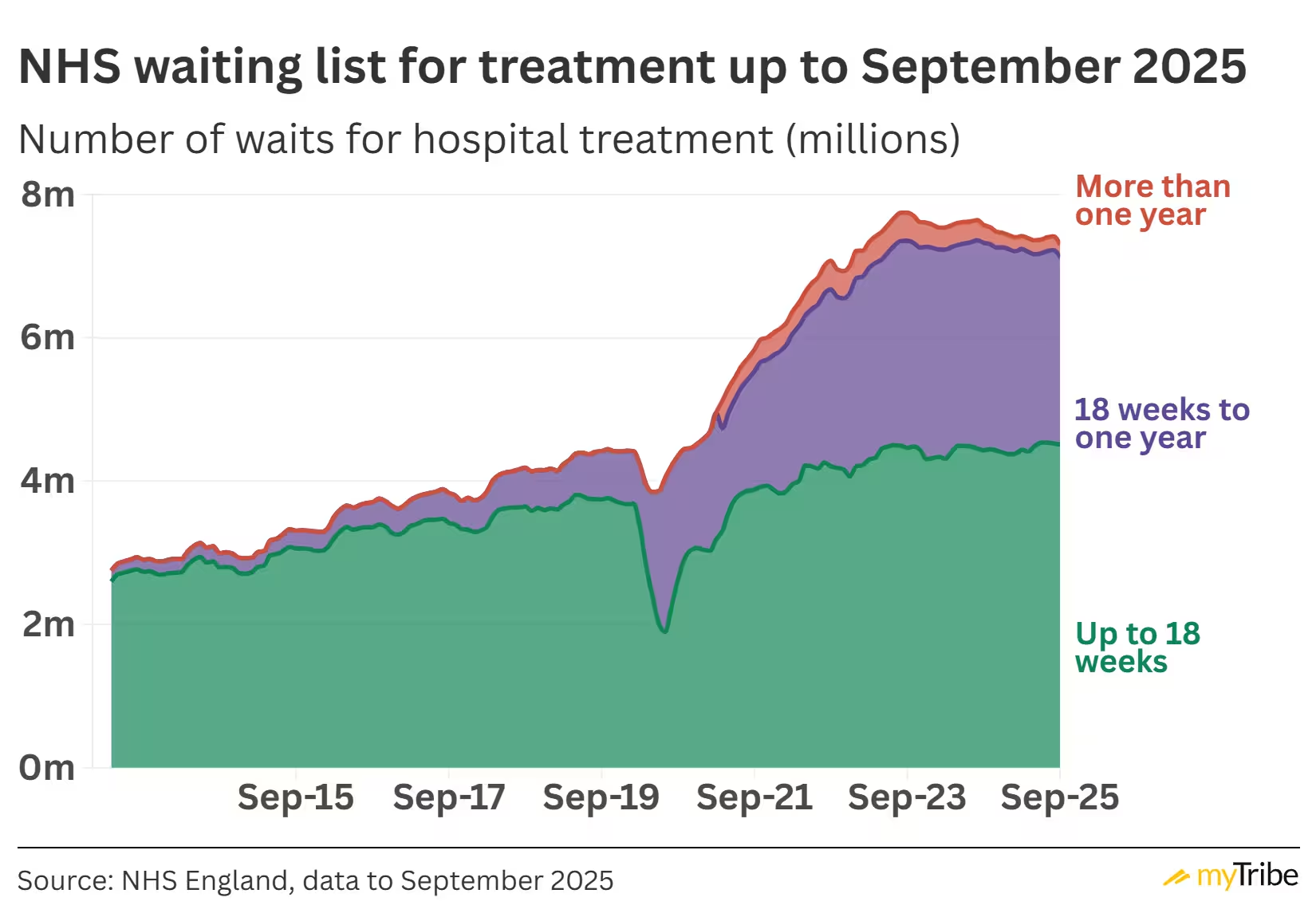
Earlier in 2024, the Office for National Statistics (ONS) released findings from a recent survey, which showed that NHS waiting lists are potentially much bigger than previously feared. It suggests an estimated 9.7 million adults are waiting for a hospital appointment, test, or to start receiving treatment via the NHS.
What are the benefits of private health insurance?
Generally speaking, you can expect all of the following benefits from a health insurance policy:
- Be treated sooner in a private healthcare setting, bypassing NHS waiting lists
- Access to a virtual private GP, and other remote healthcare services
- A private room if you're admitted to hospital
- More choice over who provides your treatment
- Various rewards, discounts and member incentives
Read more about the benefits of private health insurance
Private health insurance covers the costs associated with treating acute medical conditions, meaning those which, generally speaking, are curable. Chronic conditions are usually excluded, as are pre-existing conditions you've suffered from in the past five or three years if you opt for moratorium underwriting. There are many benefits of health insurance, there are limitations too, and it's not designed to replace the NHS but work alongside it.
Core cover vs comprehensive policies
Even the most basic policies will cover the cost of being treated in a private hospital where you require a bed for a day or overnight. However, you'll need to be diagnosed via the NHS, or self-pay to be diagnosed privately before you can claim for medical treatment.
Comprehensive health insurance usually includes outpatient cover, sometimes limited to a monetary value per year. With these policies, all you need is a referral from your GP, and then everything from then onwards will be done privately.
All providers and their policies are different, so take your time when choosing the right one for you. We recommend that you always speak to a qualified broker before deciding as they understand all of the policies and can provide you with individual advice.
If you're looking for a lower cost policy, read our guide to cheap health insurance in the UK.
Optional extras
While comprehensive policies will cover numerous private healthcare treatment and diagnosis options, you can also look to enhance your cover with a range of extras; typically including:
- Therapies cover - such as physiotherapy (although many will include post-op physiotherapy sessions in their core product).
- Mental health cover - many policies include access to helplines, but you'll usually pay more for access to more extensive private healthcare treatment options.
- Dental and optical cover - you can get help towards the cost of routine appointments and check-ups.
- Travel insurance - if you want your private health insurance to extend beyond the UK.
What's excluded from private healthcare cover?
All private healthcare insurance companies will have some exclusions, and it's always best to refer to your policy documentation to see what yours excludes. However, generally speaking, you can expect the following to be excluded on most policies:
- Monitoring of and treatment of long-term (chronic) conditions
- Emergency treatment
- Cosmetic treatment
- Self-harm, alcohol abuse and drug abuse
- Normal childbirth, birth control and infertility
- Treatment that takes place outside the UK
Please note: There are some circumstances or providers, where what we’ve listed above may be covered.
In 2024, we obtained 900 quotes from the top health insurance companies for fictional people of varying ages living in different locations across the UK. The following table shows the research results, with the average cost for a comprehensive private healthcare policy with the eight top providers in the UK.
*Average based on quotes from eight leading health insurers in 10 UK cities in June 2024. We opted for a comprehensive policy, with a £250 excess (or as close as possible), outpatient cover limited £1,000 per policy year where possible, and we included alternate therapies cover. We opted for a guided consultant list where available, excluding mental health, dental, optical and travel cover.
Disclaimer: This information is general and what is best for you will depend on your personal circumstances. Please speak with a financial adviser or do your own research before making a decision.
Frequently Asked Questions
How can I buy health insurance?

The two ways you can buy health insurance in the UK are by researching your options and going direct to private medical insurance providers for quotes, or you can use a health insurance broker. We recommend using a broker, as they'll perform a market review for you, and help you find the best private health insurance for your requirements.
Who is the No 1 Health Insurance Company In the UK?
Bupa is the No. 1 health insurance company in the UK for 2025, with its Bupa By You Comprehensive plan rated as the top private health insurance option. It offers outstanding cover levels including market-leading mental health coverage, alongside a host of other valuable benefits.
Who are the primary providers of private medical services in the UK?
There are a number of excellent private hospitals groups in the UK. However, the ones you can access through your health insurance will vary. These are the main providers:
- Nuffield Health - One of the best known private healthcare providers in the UK, Nuffield Health is a not-for-profit charity, that has private hospitals and fitness and wellbeing clubs.
- Spire Healthcare - Spire Healthcare has private hospitals across the UK and provides a large range of treatments, from cancer and cardiac care, through to diagnostic scans, tests and investigations.
- Circle Health Group - Circle Health Group has private hospitals and clinics throughout the UK. Offering over 500 different medical treatments, the private healthcare group has centres of excellence for cancer, spinal, orthopaedic, neuro and cardiac care.
- HCA - HCA operates six world-class private hospitals across London and the Christie Private Care Hospital in Manchester. Private healthcare at these hospitals tends to cost more than with some of the other groups mentioned and often isn’t covered by health insurers’ standard hospital lists.
- Ramsay Healthcare - Ramsay Healthcare has a network of private hospitals in England and Wales, which provide a comprehensive range of clinical services to over 200,000 people a year.